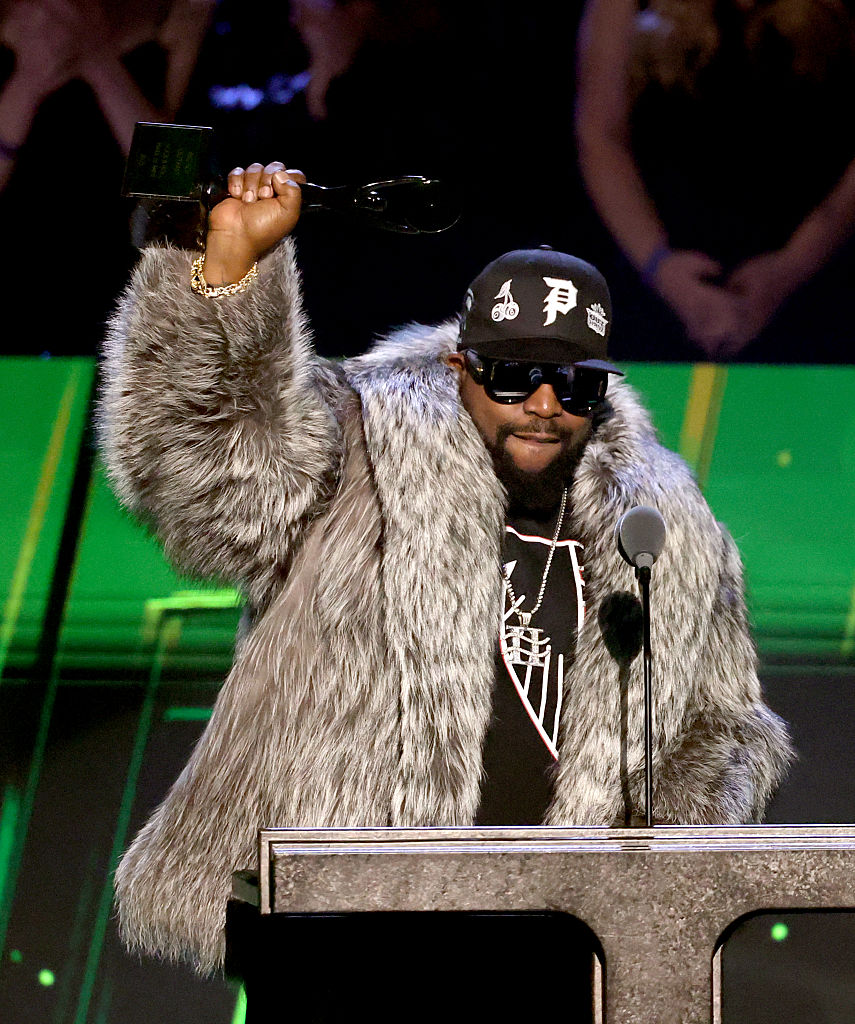
Big Boi is revisiting one of the more revealing chapters in Outkast’s early grind.
In a new episode of Conversate With Killer Mike, the Atlanta legend broke down a moment from the mid-’90s that still lingers in his memory — a night when Outkast and Wu-Tang Clan shared a bill in Chicago, and a sudden sound outage left the Southern duo questioning whether the love in the room was real.
The story surfaced after Cutmaster Swiff, Outkast’s longtime DJ, spoke on the uneasy energy the group often felt as the lone Southern act on national lineups. Swiff said they were always placed in the same hotels as the East Coast crews, surrounded by support that didn’t always feel authentic. That “fake love,” as he described it, set the stage for Big Boi’s recollection.
“I remember when we used to do a lot of shows with Wu-Tang,” Big Boi said. “We was closing. And when we got to perform, them n***as pulled the plugs on the speaker or something like that… We thought they did. Fucked our sound up.”
Big Boi admitted the proof wasn’t concrete, but the timing felt intentional. “I’m pretty sure it was them,” he added.
Outkast’s Big Boi Remembers Wu-Tang Clan Pulled The Plug On Their Shows
Big Boi addressed that this happened long before Outkast and Wu-Tang built their later chemistry, years before their 1998 collaboration “Skew It On The Bar-B.” At the time, the South was still fighting for space on national stages, often met with skepticism from East Coast gatekeepers.
Even with the audio issues, Outkast refused to fold. Big Boi said the duo kept the show alive, but backstage, the team wrestled with what went down. “We thought that was neutral ground,” he said of the Chicago stop. “Like, na please, clink. Pull the plug on them nas, ain’t no more show.”
Still, Big Boi pushed back against framing the moment as a full-on beef. He explained that things were never openly hostile between the two groups. “It was always love,” he said, though he admitted certain moments felt “subliminal” and made them question how deep that love really went.
Big Boi’s story reflects the environment in which Outkast came up. A period when the South was still fighting to be taken seriously. While sharing stages with groups they would eventually call brothers.
It’s a reminder of how much work Outkast put in to earn respect, city by city, co-headline by co-headline.
Leave a Reply